
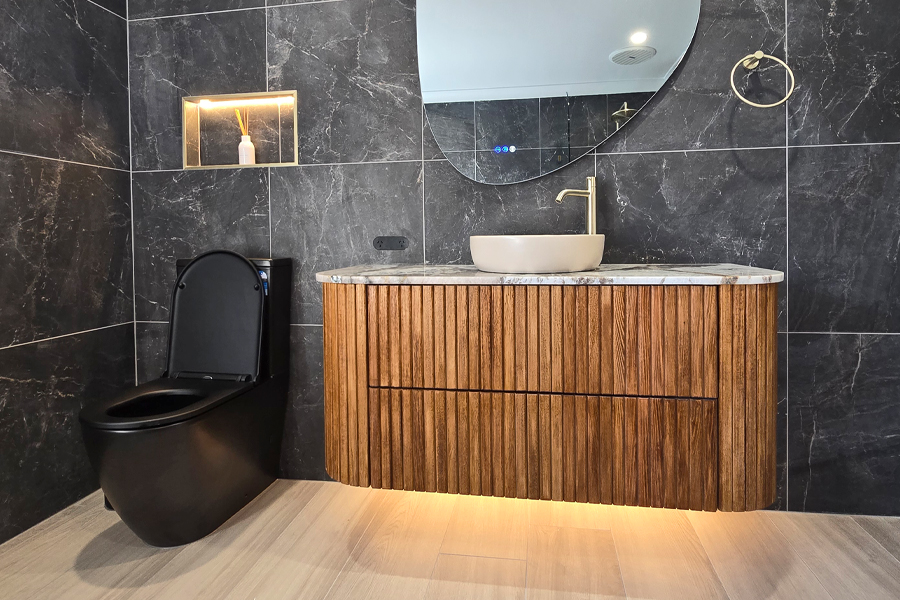
Reviewed by the Armrock Constructions team — 450+ bathroom renovations completed across the Gold Coast
Quick answer: A floating (wall-hung) vanity suits small bathrooms and modern layouts because it exposes the floor, makes cleaning easier and can be set at any height. A freestanding vanity suits bathrooms with weaker walls, fixed plumbing or a need for maximum storage, because it carries its weight on the floor. Both perform well when built and installed correctly, so the right choice comes down to wall structure, storage and style.
Choosing between freestanding vs floating vanities is one of the first decisions in any bathroom renovation, and it shapes more than the look. It affects plumbing positions, wall preparation, storage, cleaning and how big the room feels. Here is how the two options compare, so you can decide before the design is locked in.
What is the difference between a freestanding and a floating vanity?
A freestanding vanity sits on the floor, either on legs, a plinth or a full-height base. The floor carries the weight of the cabinet, benchtop, basin and everything stored inside.
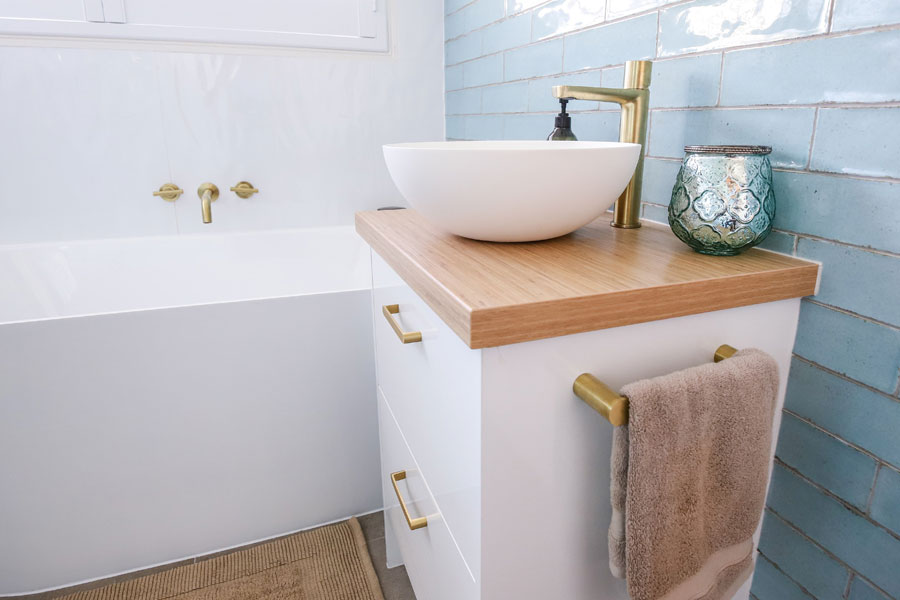
A floating vanity is fixed to the wall with concealed brackets or a steel support rail, with clear floor space underneath. The wall carries the entire load, which is why wall preparation matters so much.
Both styles can be purchased ready-made or built as custom bathroom vanities to suit your exact dimensions. Custom-built vanities are popular across Gold Coast renovations because standard sizes rarely fit older bathrooms perfectly.
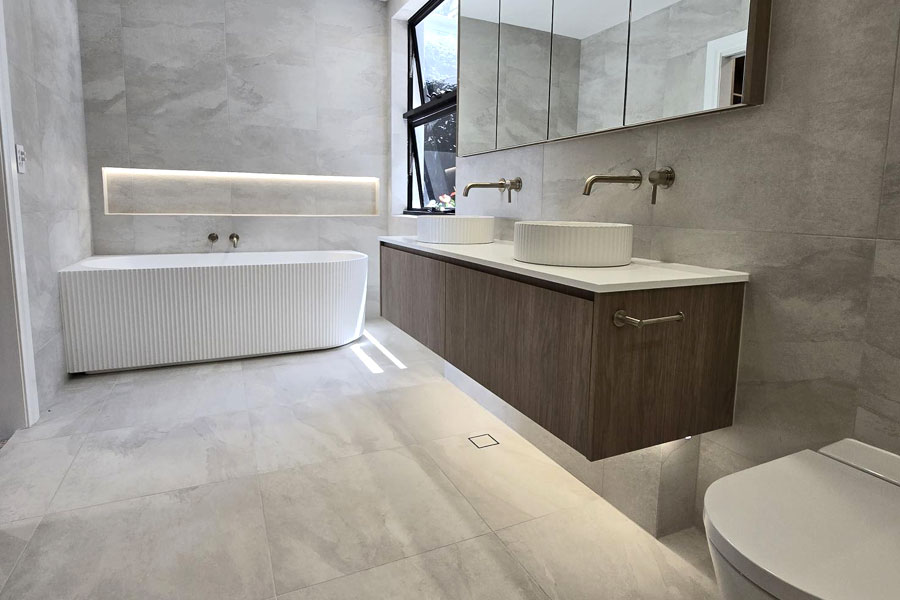
Where floating vanities work best
Small and narrow bathrooms. Seeing the floor run continuously under the cabinet makes a room feel larger, which is why floating designs feature heavily in small bathroom and high-rise bathroom renovations on the Gold Coast.
Easier cleaning. With no toe-kick or legs, a mop or robot vacuum passes straight underneath. There is no sealed corner where moisture and dust collect.
Flexible heights. Most vanity benchtops sit between 850 mm and 900 mm from the floor. A wall-hung unit can be set higher for tall users or lower for children and accessible bathrooms, without changing the cabinet.
Feature lighting. Under-vanity LED strips work especially well with a floating cabinet, adding a soft glow at night and highlighting the floor tiles.
The trade-offs: floating vanities need solid wall support, and the exposed plumbing space usually needs a neat cover-up, such as a recessed trap or a false back panel. Storage is also often limited to drawers, since a floating unit cannot be too deep or too tall without adding stress to the wall.
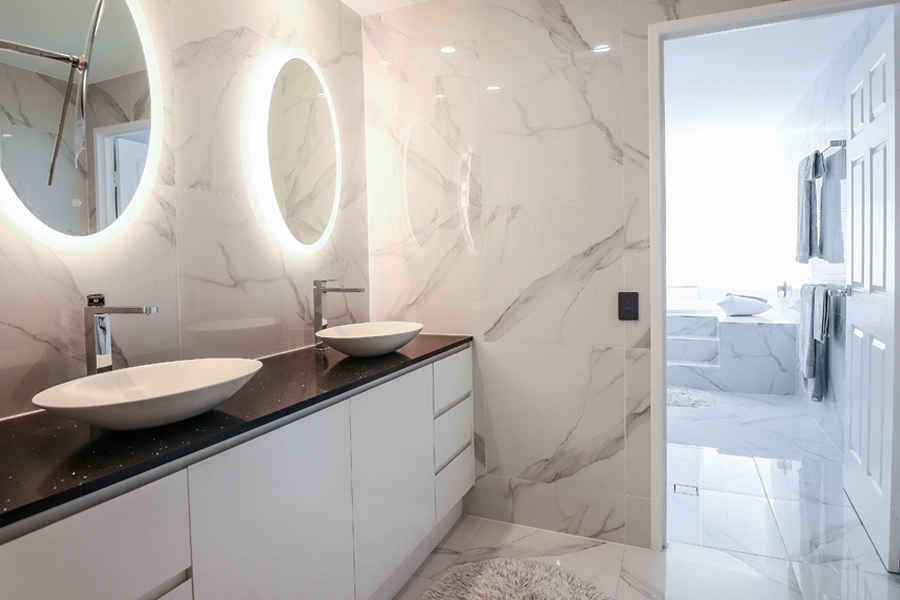
Where freestanding vanities work best
Older homes and lightweight walls. If the wall is thin plasterboard on studs with no solid backing, a freestanding vanity avoids the need to open the wall up.
Maximum storage. Freestanding cabinets can be deeper and taller than wall-hung units, with full-height doors, internal shelving and a base that stores bulkier items like spare towels and cleaning supplies.
Heavy benchtops. Engineered stone, marble and thick composite tops are heavy. A freestanding base spreads the load to the floor and reduces the risk of sagging.
Traditional and transitional styles. Shaker doors, furniture-style legs and timber-look finishes suit freestanding layouts better than floating ones.
The trade-offs: freestanding vanities collect dust and moisture around the base, and legs or plinths can make small bathrooms feel more closed in. They also need a level floor, or the cabinet must be shimmed and sealed carefully.
Wall structure and plumbing: the deciding factors
This is where many vanity choices are made for you.
Wall strength. A floating vanity with a stone top and basin can weigh well over 50 kg before you add the items stored inside. The wall behind it needs solid backing, such as timber noggings, a plywood sheet or a steel bracket system fixed to the studs or masonry. With this in place, wall-hung vanities are stable and long-lasting. Without it, they can pull away from the wall over time.
Waterproofing. Under AS 3740, wet areas in Australian homes require waterproofing to the standard set out for the shower, floor and adjoining walls. Vanity fixings should never penetrate the waterproofed shower zone, and any penetration through a waterproofed surface must be sealed properly. This is one reason licensed trades should handle the fit-out.
Plumbing positions. Moving the waste and water supply is possible, but it adds to the scope of work. If you want to reposition the basin or switch from one basin to two, read our guide on whether you can move the plumbing in a bathroom renovation. Floating vanities usually suit in-wall plumbing, while freestanding vanities can hide pipework inside the cabinet.
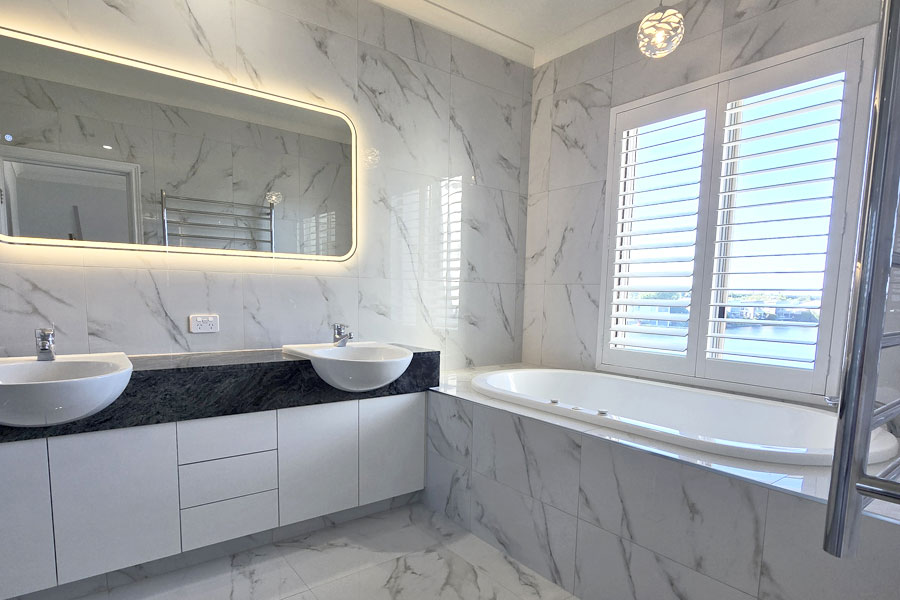
Storage and drawer layout
Floating vanities are typically drawer-based, with one to three drawers and an internal cut-out for the basin trap. This layout gives easy access to everything stored and avoids the “lost space” at the back of a cupboard.
Freestanding vanities offer more options, including a mix of doors and drawers, open shelving and tall cabinets. If storage is your priority, it helps to plan drawers around what you actually use, and our guide to how many drawers a bathroom vanity should have walks through a simple approach.
For larger bathrooms, two basins in a bathroom renovation can be paired with either style. A double vanity bathroom layout usually needs at least 1200 mm of benchtop width, and floating double vanities require additional wall support at both ends.
Materials, benchtops and coastal conditions
Both vanity types can be finished in 2-pac painted cabinetry, laminate, timber veneer or polyurethane. Moisture resistance depends on the edge sealing and the quality of the board, not on whether the cabinet is floating or freestanding.
Benchtop choice affects weight and price more than vanity type. Laminate benchtops are lighter and suit floating designs well. Engineered stone and natural marble are heavier, which favours a freestanding base or a reinforced wall. You can compare options in our guide to bathroom benchtop solutions.
Coastal conditions matter too. Homes near the Broadwater, canals and beaches deal with higher humidity and salt-laden air. Stainless or brass hardware, sealed cabinet edges and good ventilation matter more than the vanity style itself.
Which vanity should you choose?
Choose a floating vanity if:
Your bathroom is small or narrow
You want easier cleaning and a modern look
The wall can be reinforced during renovation
Drawers give you enough storage
Choose a freestanding vanity if:
your walls cannot easily be reinforced
you want extra storage or tall cabinetry
you’re using a heavy stone benchtop
you prefer a traditional or transitional style
If you’re still weighing it up, browse our vanity gallery to see both styles in completed Gold Coast bathrooms.
Frequently asked questions
Often, yes, but not always. Floating vanities can cost more to install because of the wall reinforcement and concealed fixings. A freestanding vanity may cost less to fit, but a custom-built unit in either style can cost more than a standard off-the-shelf option.
Yes, provided the wall has solid backing and the vanity is fixed with rated brackets or a steel support rail. Heavier stone tops need closer attention to the fixing points and cabinet construction.
A floating vanity, because the floor beneath it is fully accessible. A freestanding vanity is still easy to maintain if it sits on a sealed plinth or slim legs.
Generally, yes. Exposing more floor makes a compact bathroom feel larger, and the slimmer profile can save a few centimetres of room. Storage is usually the compromise.
Yes, though it may involve rerouting plumbing, reinforcing the wall and adjusting the tile layout. It’s much easier to plan this at the design stage than to change it partway through.
Ready to plan your vanity?
The best vanity is the one that suits your walls, your storage needs and the way you use your bathroom every day. Our team manages the design, plumbing, tiling, cabinetry and electrical work under one roof, so the vanity is planned with the whole bathroom, not as an afterthought. Explore our bathroom renovation Gold Coast service, or book a free appraisal and quote to talk through your options.